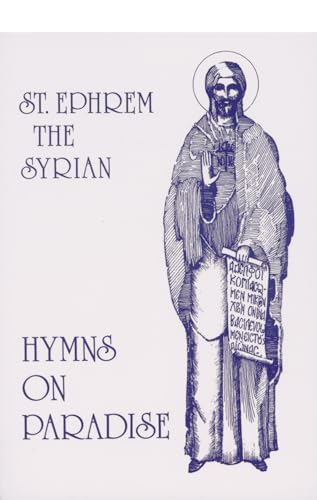
Saints

“Harp of the Spirit”
St. Ephraim the Syrian
Deacon of Edessa · Harp of the Spirit
The fourth-century Syriac father whose verse-homilies and hymns gave the Eastern Church one of its earliest and most enduring voices in praise of the Incarnation, the Cross, and the Resurrection.
3 readers asking
- Born
- c. 306 (Nisibis)
- Reposed
- June 9, 373 (Edessa)
- See
- Edessa (deacon)
- Feast
- January 28
His life
Ephraim was born around the year 306 at Nisibis in Mesopotamia, on the frontier between the Roman empire and Persia. He was raised in the Christian faith and from his youth was attached to the bishop of Nisibis, St. James, who took him as a disciple and brought him to the First Ecumenical Council at Nicaea in 325 as part of his retinue.
He served the church at Nisibis through three successive bishops and three Persian sieges of the city. After the Roman cession of Nisibis to the Persians in 363 he withdrew with most of the Christian population to Edessa, on the Roman side of the new border, where he spent the last ten years of his life teaching, writing, and serving as a deacon in the local church.
Ephraim is the principal Father of the Syriac-speaking East. He wrote almost everything in verse — hundreds of hymns (madrashe) and verse-homilies (memre) on the Nativity, the Crucifixion, Pascha, the Faith, the Church, Paradise, the Transfiguration, and many more. His verse is dense with biblical typology, lyrical in its meditation, and theologically precise; the Syriac Church sings it to this day, and the Greek and Slavonic traditions received much of it under his name in translation.
He reposed at Edessa on June 9, 373, ministering to victims of a famine. The Greek Church celebrates his memory on January 28; the Syriac and Western traditions on June 9. He is honoured as 'the Harp of the Spirit' for the lyrical theology by which the East was first catechised in song.
In his own words
His garments white as light showed that the glory of His divinity flooded from His whole body, and His light shone from all His members. For His flesh did not shine with splendour from outside, like Moses, but the glory of His divinity flooded from Him.
Writings
Read his works
Licensed Works
Holy St. Ephraim the Syrian, pray to God for us.