Saints
“Seal of the Fathers”
Patriarch of Alexandria · Seal of the Fathers
The patriarch whose Christology defeated Nestorianism at the Council of Ephesus and whose commentary on John defends the eternal divinity of the Word.
His life
Cyril was born about 376 to a notable Alexandrian family and trained from his youth in Scripture and the writings of Athanasius, his predecessor by two generations on the throne of St. Mark. As a young man he spent five years among the monks of the Egyptian desert before returning to the city to assist his uncle, the patriarch Theophilus.
He succeeded Theophilus in 412 and would govern the Church of Alexandria for thirty-two years. His earliest works are exegetical: a long commentary on John, a parallel commentary on Luke, a treatise on the Trinity in dialogue form. He read every line of Scripture against the question that mattered to him most: who is Christ?
In 428 Nestorius, archbishop of Constantinople, denied that the Virgin Mary should be called Theotokos, the God-bearer, on the grounds that Christ had two persons. Cyril answered with twelve anathemas and rallied the Church. At the Third Ecumenical Council at Ephesus in 431, the title Theotokos was vindicated and Nestorius was deposed.
Cyril spent his last years defending and refining the Christology that the Council had received, and is honored to this day as the Seal of the Fathers for the precision and authority of his teaching. He reposed in Alexandria on June 27, 444.
In his own words
To call Mary Theotokos is not to say that her flesh contributed something to the divine nature, as if the Word received existence or essence from her. It is to confess that the One whom she carried for nine months and laid in the manger is the eternal Son.
If anyone does not confess that the Word of God suffered in the flesh and was crucified in the flesh and tasted death in the flesh and became the firstborn of the dead, since He is Life and Life-giving as God, let him be anathema.
Writings
c. 425
The twelve books, in the Library of the Fathers translation
Cyril's reading of the Fourth Gospel, ordered by the question who is Christ, given to the Church before the Nestorian crisis erupted. All twelve books, the fullest Greek commentary on St John that survives.
Open work →
c. 430
Selections from Books I, II, III, and V
Cyril's first systematic answer to Nestorius, written in the spring before Ephesus. Quotes Nestorius line by line and refutes him from Scripture, the Fathers, and the rule of faith.
Open work →
c. 430
The Second Letter, the Third Letter, and the Twelve Anathemas
The two dogmatic letters and the Twelve Anathemas appended to the third — the conciliar standard received at Ephesus in 431 as the Church's confession of the one incarnate Word.
Open work →
c. 430
The surviving sermons, translated from the Syriac
Cyril's homiletic reading of Luke, preserved chiefly in Syriac. One hundred and thirty-eight sermons carrying the Gospel from the Virgin's consent to the road to Emmaus, and the only patristic commentary this library holds on Luke.
Open work →
c. 435
A short Christological handbook
Cyril's compact teacher's syllabus on the Incarnation — the eternal generation, the personal union, the communicatio idiomatum — written for clergy who needed precise definitions after Ephesus.
Open work →
Licensed Works
These works are licensed and copyrighted by their publishers and cannot be hosted on Purify. As an Amazon Associate, Purify earns from qualifying purchases.

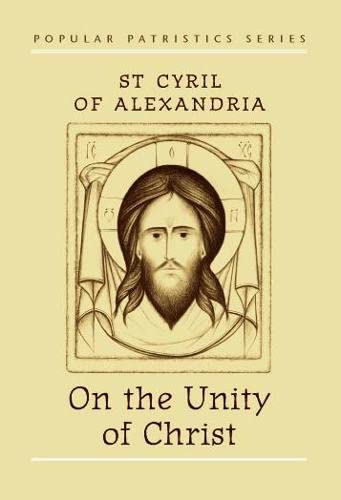
Popular Patristics Series
By Cyril of Alexandria
St. Vladimir's Seminary Press · 1995
Cyril's mature statement of the union of natures in the one incarnate Word, the doctrinal voice that carried the day at Ephesus and shaped the Chalcedonian definition. John McGuckin's translation.
Events during this saint's life
Explore the interactive timeline →Holy St. Cyril of Alexandria, pray to God for us.
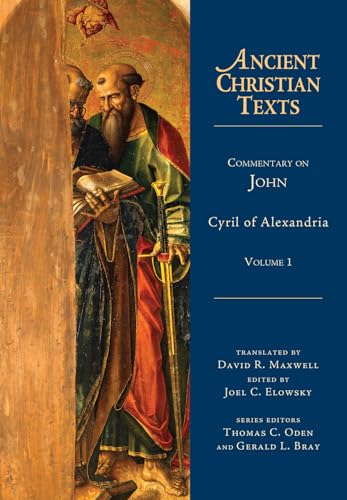
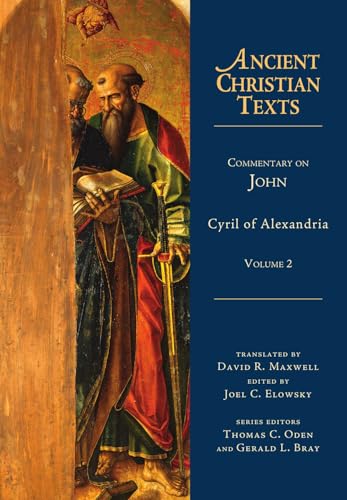
IVP Academic · 2013
Books 1–6 of Cyril's twelve-book exegesis of the Fourth Gospel, the first complete modern English translation. David R. Maxwell, working from Pusey's critical Greek text, restores the work to general readability.
Books 7–12 of the Commentary on John, completing Maxwell's translation, including Cyril's exposition of the Last Supper discourses, the high-priestly prayer, and the Resurrection appearances.

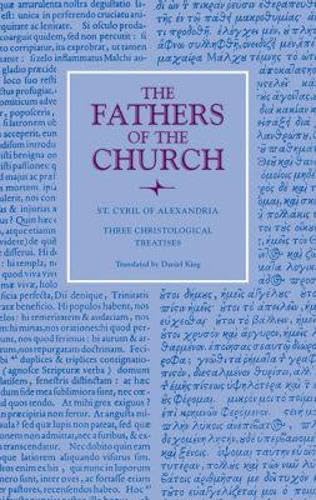
Fathers of the Church, Vol. 129
By Cyril of Alexandria
The Catholic University of America Press · 2014
On Orthodoxy to Theodosius, Defense against the Bishops of Oriens, and Defense against Theodoret, the three works in which Cyril explained his Twelve Anathemas to the Emperor and his critics on the eve of Ephesus. Daniel King's translation, the first into English.

Fathers of the Church, Vol. 76
By Cyril of Alexandria
The Catholic University of America Press · 1987
The first half of Cyril's surviving correspondence, including the Second Letter to Nestorius, the Third Letter with the Twelve Anathemas, and the Letter to John of Antioch that sealed the Formulary of Reunion. John I. McEnerney's translation.

Fathers of the Church, Vol. 77
By Cyril of Alexandria
The Catholic University of America Press · 1987
The second and final volume of McEnerney's translation of Cyril's letters, Christological clarifications after the Reunion of 433, pastoral correspondence, and the Letter to Eulogius on the proper reception of the Antiochene formula.

Fathers of the Church, Vol. 118
By Cyril of Alexandria
The Catholic University of America Press · 2009
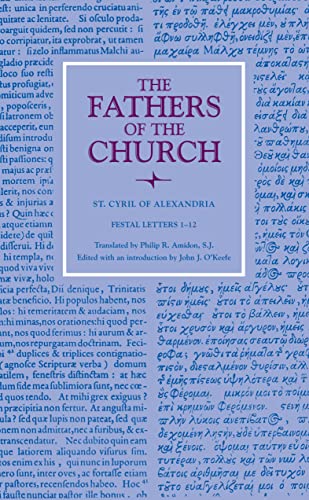
The annual Paschal letters by which the Alexandrian patriarch announced the date of Pascha and prepared his flock for the great fast, Cyril's pastoral voice, year by year, on repentance, almsgiving, and the meaning of the Resurrection. Philip Amidon's translation.

Fathers of the Church, Vol. 127
By Cyril of Alexandria
The Catholic University of America Press · 2013
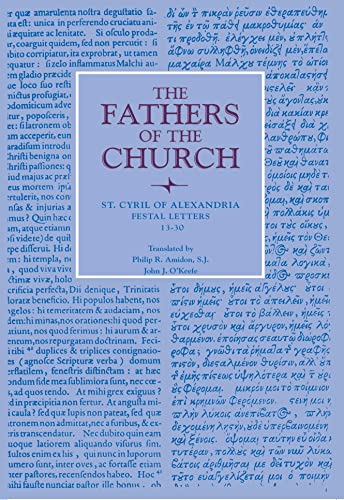
The remaining festal letters Cyril sent across his patriarchate, including the letters of the years through and beyond Ephesus, in which the Christological controversy enters his Paschal preaching.
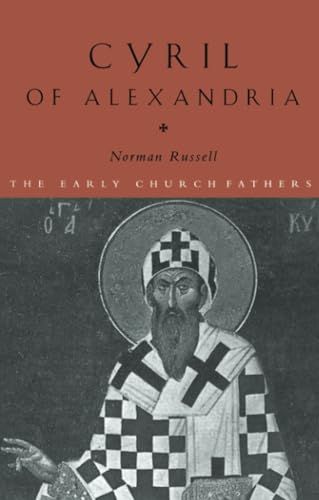
Russell's introduction to Cyril's life, method, and theology, with fresh translations of selections from the major works, the Commentary on John, the Christological treatises, the Against Julian, and the Letters. The standard scholarly entry point.

Its History, Theology, and Texts
About John A. McGuckin
St. Vladimir's Seminary Press · 2004
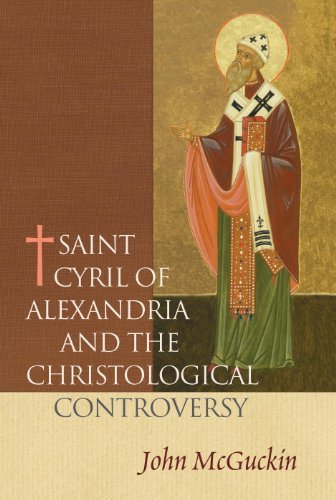
McGuckin's standard study of the fifth-century clash between Cyril and Nestorius, political, theological, and personal, with key primary texts in translation.

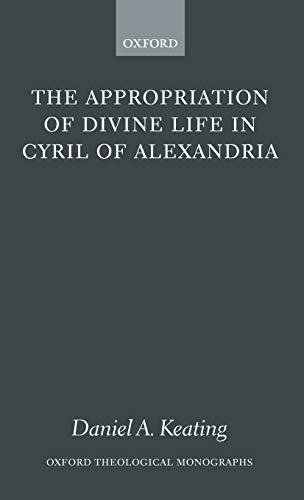
Oxford Theological Monographs
About Daniel A. Keating
Oxford University Press · 2004
Keating's comprehensive account of sanctification and deification in Cyril, drawn from the New Testament commentaries and homilies. The definitive monograph on the soteriology that runs beneath Cyril's Christology.