Saints

St. Sophronius of Jerusalem
Patriarch of Jerusalem · Defender against the Monothelites · Hymnographer
Patriarch of Jerusalem and one of the first and clearest voices against the Monothelite heresy, whose synodical letter prepared the way for the confession of the Sixth Ecumenical Council. A monk and a poet, he wrote the Life of Mary of Egypt and many hymns of the Church, and it fell to him to surrender the holy city to the Arabs in his last years.
0 readers asking
- Born
- c. 560 (Damascus)
- Reposed
- March 11, 638 (Jerusalem)
- See
- Jerusalem
- Feast
- March 11
His life
Sophronius was born around the year 560 at Damascus and was given the name of the Sophist for his learning. He embraced the monastic life and travelled the monasteries of Egypt, Sinai, and Palestine in the company of his teacher and friend John Moschus, who gathered in those journeys the tales of the desert fathers that became the Spiritual Meadow.
He was a monk of deep prayer and a poet of the Church. He wrote the Life of our holy Mother Mary of Egypt, which the Church reads each year in the fast of Great Lent, and many of the hymns and prayers still sung in the services, among them the verses of the Great Blessing of the Waters at Theophany.
Late in his life, in 634, he was made Patriarch of Jerusalem, and at once raised his voice against the new teaching of one will in Christ that was spreading from the capital. His synodical letter, sent on his enthronement, set out the faith of two natural wills and operations with such fullness that it became one of the foundations on which the Sixth Ecumenical Council would build, half a century after his death.
His patriarchate fell in the years of the Arab conquest. When the armies of the Caliph Omar came to Jerusalem, it was Sophronius who, after a long siege, went out to surrender the holy city, securing by treaty the safety of the Christians and their churches. He is said to have wept to see the conqueror standing on the place of the Temple.
He reposed not long after, on the eleventh of March, 638. The Church keeps his memory on that day, honouring the patriarch, hymnographer, and confessor whose defence of the two wills of Christ went before the Sixth Ecumenical Council.
Licensed Works
Books in print
These works are licensed and copyrighted by their publishers and cannot be hosted on Purify. As an Amazon Associate, Purify earns from qualifying purchases.
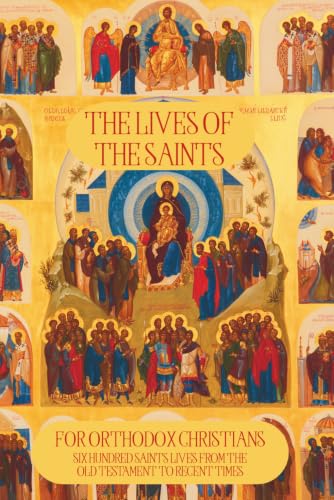
The Lives of the Saints for Orthodox Christians
Holy St. Sophronius of Jerusalem, pray to God for us.