Saints

“of Nineveh”
St. Isaac the Syrian
Bishop of Nineveh · Hermit of the Mountain
The seventh-century hermit-bishop whose homilies on repentance, stillness, and the boundless mercy of God became one of the most beloved guides to the inner life across the whole Orthodox world.
4 readers asking
- Born
- 7th c. (Beth Qatraye)
- Reposed
- Late 7th c. (Mesopotamia)
- See
- Nineveh
- Feast
- January 28
His life
Isaac was born in the seventh century in Beth Qatraye, the region along the western shore of the Persian Gulf, near the modern Qatar. From his youth he embraced the monastic life, devoting himself to the reading of Scripture, to silence, and to unceasing prayer, until his holiness became widely known.
He was consecrated bishop of Nineveh, in the land of the Assyrians, by the Catholicos George. But after only five months he asked to lay down the office and return to the solitude he loved. He withdrew to the wilderness of the mountain of Matout, and afterward to the monastery of Rabban Shabur in the mountains of Khuzistan, where he gave himself wholly to ascetic struggle and the contemplation of God.
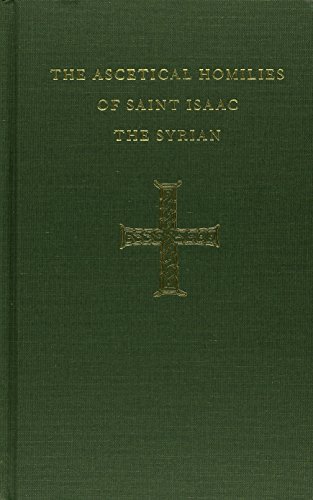
In his old age, the tradition relates, he lost his sight from his constant reading and weeping over the Scriptures, and he dictated his teachings to his disciples. He reposed in great old age and was buried at the monastery of Rabban Shabur. His writings, gathered as the Ascetical Homilies, treat of repentance and compunction, of tears and stillness, of humility, and above all of the mercy of God, which he calls a heart burning for all creation.
Isaac lived and served within the Church of the East, beyond the eastern frontier of the Roman empire, in a body separated from the imperial Church by the controversies of the fifth century. Yet his ascetical writings, free of those disputes and wholly given to the life of prayer, were received with love throughout the Orthodox Church. Translated into Greek at the Lavra of St. Sabas, they passed into Slavonic and into every Orthodox land, and have been treasured by the monks of Athos, by the elders of Optina, and by countless faithful, as among the surest guides to the heart's return to God.
The Greek and Slavic Churches keep his memory on the twenty-eighth of January, with St. Ephraim the Syrian, honouring the two great fathers of the Syriac East together.
Writings
Read his works
Holy St. Isaac the Syrian, pray to God for us.