Purify
TodayBiblePrayersSaints
Discover
CalendarCommunityShop
SupportAccount

The Bible

  • Old Testament
  • New Testament
  • Search

The Saints

  • The Saints
  • The Fathers
  • Writings

The Library

  • Reading
  • Discover
  • Councils
  • Topics
  • Heresies
  • Shop

The Calendar

  • Today
  • This month
  • Pascha
  • The fasts

The Prayer

  • Open today's prayer
  • Morning Rule
  • Evening Rule
  • The Jesus Prayer
  • Learn to Pray

About this work

  • About
  • Purify Plus
  • Privacy
  • Terms
  • FAQ
  • Support the work
  • What's new
  • Account

Find us

Discord@purifymylife@purify.app@purifymylife
Language
Purify

Glory to God for all things.

© 2026 · 1.3 · Public-domain texts unless otherwise noted.

Saints

GP
Icon of St. Gregory Palamas

“Defender of Hesychasm”

St. Gregory Palamas

Archbishop of Thessaloniki · Theologian of the Uncreated Light · Defender of the Hesychasts

Athonite monk and Archbishop of Thessaloniki who, against the philosophical attacks of Barlaam the Calabrian, defended the hesychast prayer of the heart and gave the Eastern Orthodox Church its mature theological grammar for what man knows of God: that God is unknowable in His essence and truly known in His uncreated energies, the same uncreated divine light the three disciples saw on Tabor.

10 readers askingSign in to request
Born
1296 (Constantinople)
Reposed
November 14, 1359 (Thessaloniki)
See
Thessaloniki
Feast
November 14 · Second Sunday of Great Lent

His life

Gregory was born in Constantinople in 1296, the eldest son of a senator at the court of the Emperor Andronikos II. His father reposed when Gregory was a small child, and the Emperor himself took on the upbringing of the four orphaned children, intending Gregory for a high office in the imperial administration. Gregory studied at the imperial university, where he excelled especially in Aristotelian logic; at twenty he gave a public oration on Aristotle that astonished his teachers.

He resolved to enter the monastic life. He brought his two brothers, his mother, his two sisters, and most of the household servants to the consent of his decision, and the whole household entered monasteries at the same time: Gregory and his brothers to Mount Athos, his mother and sisters to a convent in Constantinople. Gregory was twenty years old; the year was 1316.

On the Holy Mountain he was placed under the elder Nikodemos of Vatopedi and was given the prayer of Jesus and a long period of silence and watchfulness in the cell. After the death of Nikodemos he passed to the Great Lavra, then to a small hermitage near it, then, when the Turkish raids made the southern Athonite peninsula unsafe, to the monastery of St. Sabbas at Beroea on the mainland, where he spent five more years in stricter asceticism. He returned to Athos in 1331 and was ordained to the priesthood.

In 1335 the controversy began that would consume the rest of his life. The Calabrian philosopher and theologian Barlaam, who had come to Constantinople from southern Italy, attacked the Athonite hesychasts in writing: he ridiculed their practice of the Jesus Prayer joined to the breath, their claim that pure-hearted ascetics could behold an uncreated divine light, and their teaching that God can be truly known in something other than the bare logical concept of His existence. Gregory was asked by the Athonite community to answer Barlaam. The Triads in Defense of the Holy Hesychasts (1338–1341), three sets of three treatises each, are the principal answer. In them Gregory worked out the distinction the Church has held ever since: God's essence is unknowable and incommunicable to any creature, but His uncreated energies, His operations, His grace, are truly God Himself, and through them the saints really partake of God, by deification, while remaining creatures.

Three Constantinopolitan synods, in 1341, 1347, and 1351, vindicated the Palamite teaching against Barlaam, against the later attacks of Akindynos and Nikephoros Gregoras, and against the philosophical view that the divine light is created. The Synodal Tomos of 1351 was placed in the Synodikon of Orthodoxy and is read aloud in many Orthodox churches on the First Sunday of Great Lent (Sunday of Orthodoxy). The Tomos Hagioreitikos, the brief Athonite confession Gregory had co-drafted with the elders of the Holy Mountain in 1340 in support of the hesychast practice, was received by the Church as the Athonite witness to the same teaching.

In 1347 Gregory was consecrated Archbishop of Thessaloniki. He held the see for the last twelve years of his life, interrupted by a year of captivity among the Turks (1354–1355) when his ship was taken in the Sea of Marmara; in captivity he debated theology calmly with the Muslim scholars set over him, and was ransomed by the Christians of Bursa. He reposed at Thessaloniki on November 14, 1359, at the age of sixty-three. Nine years later, in 1368, the Patriarch Philotheos Kokkinos of Constantinople (who had been one of his disciples) presided over his glorification as a saint; the second Sunday of Great Lent was set aside for the universal commemoration of his memory and his teaching, as a kind of continuation of the Sunday of Orthodoxy: that the Faith confessed against the iconoclasts in 843 is the same Faith confessed against the philosophical attack on hesychasm in 1351.

Holy St. Gregory Palamas, pray to God for us.
In his own words

“The illumination, or divine and deifying grace, is not the essence but the energy of God.
Triads III.1.29 (summary of the Palamite distinction, as preserved in the Synodal Tomos of 1351)
“He who participates in the divine energy becomes, in some sense, himself light: he is united to the light and beholds with the light all that remains hidden to those who do not have this grace.
Tomos Hagioreitikos (Hagioritic Tome), 1340, on the deifying light of Tabor
“The substance of God is entirely unnameable since it is completely incomprehensible. Thus it is given names — improperly — on the basis of all its energies, although none of the names there differs from another in its denotation. But in the case of the energies each of the names has a different meaning, for who does not know that creating, ruling, judging, guiding providentially, and God's adopting us as sons by His grace are different from one another?
150 Chapters, Ch. 144 — the essence has no proper name; the energies bear distinct ones

Writings

Read his works

2 of 2 works
  • 1340 (Hagioritic Tome); 1338-1341 (Triads); 1351 (Synodal Tomos)

    The Holy Hesychast

    The Hagioritic Tome of 1340, the Apolytikia, and a guided summary of the Triads

    His own Hagioritic Tome of 1340 in PD English; the standard Apolytikia for the November 14 feast and the Second Sunday of Great Lent; and a guided summary of the central teaching of the Triads (the essence/energies distinction, the uncreated light of Tabor, the prayer of the heart) drawn from the Synodal Tomos of 1351 read at the Sunday of Orthodoxy.

    • Hesychasm
    • Essence and Energies
    • Uncreated Light
    • Tabor

    Open work →

  • compiled 2026

    The Essence and the Energies, in the Words of the Fathers

    A florilegium of patristic and Scriptural witnesses

    A short curated florilegium gathering the Scriptural and patristic witnesses to the essence-energies distinction, from Athanasius, Cyril of Jerusalem, Basil, Chrysostom, Cyril of Alexandria, Ephraim, Maximus, and John of Damascus to Palamas's own 150 Chapters and Letters. Prepared with the assistance of a reader from the Purify Discord (ChristosAnesti).

    • Essence and Energies
    • Apophasis
    • Theophany
    • Deification

    Open work →

Licensed Works

Books in print

These works are licensed and copyrighted by their publishers and cannot be hosted on Purify. As an Amazon Associate, Purify earns from qualifying purchases.

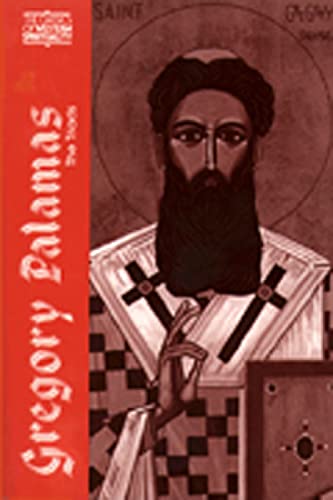
  • Cover of The Triads

    The Triads

    Classics of Western Spirituality

    By Gregory Palamas

    Paulist Press · 1983

    Palamas's defense of the hesychasts, distinguishing God's unknowable essence from His uncreated energies in which we truly partake. The cornerstone text of Orthodox theology of theosis.

    Buy on Amazon →
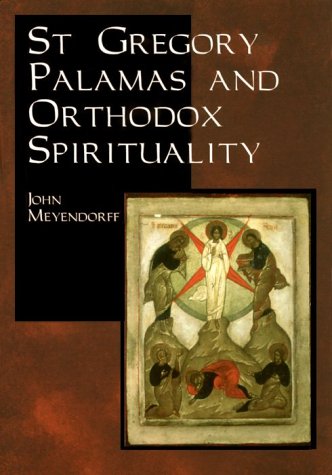
  • Cover of Saint Gregory Palamas and Orthodox Spirituality

    Saint Gregory Palamas and Orthodox Spirituality

    About John Meyendorff

    St. Vladimir's Seminary Press · 1998

    Meyendorff's accessible introduction to the spiritual world from which Palamas wrote, monastic, sacramental, and rooted in the prayer of the heart.

    Buy on Amazon →
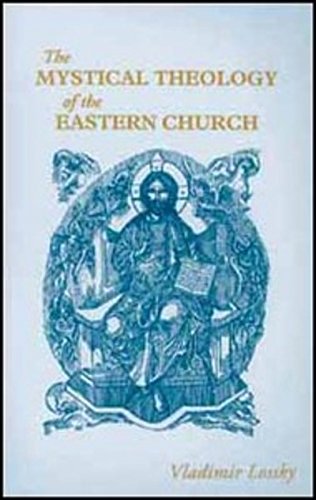
  • Cover of The Mystical Theology of the Eastern Church

    The Mystical Theology of the Eastern Church

    About Vladimir Lossky

    St. Vladimir's Seminary Press · 1976

    Lossky's classic exposition of Orthodox dogmatic theology read through the prism of the essence-energies distinction: apophasis, the Trinity, the economy of the Son and the Spirit, the deifying union. The book that introduced the Palamite vision to the modern West.

    Buy on Amazon →
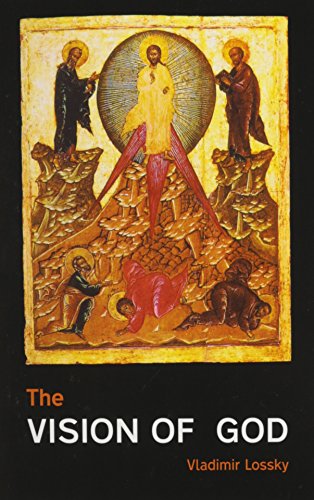
  • Cover of The Vision of God

    The Vision of God

    About Vladimir Lossky

    St. Vladimir's Seminary Press · 1983

    Lossky traces the patristic doctrine of seeing God from the Apologists through the Cappadocians and Maximus to its synthesis in Palamas, a short history of one question read across the whole Greek Fathers.

    Buy on Amazon →
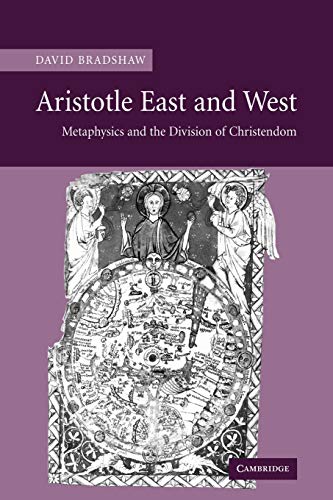
  • Cover of Aristotle East and West

    Aristotle East and West

    Metaphysics and the Division of Christendom

    About David Bradshaw

    Cambridge University Press · 2007

    Bradshaw traces the divergent reception of Aristotle's energeia in East and West, from the Cappadocians and Dionysius through Maximus to Palamas, set against the parallel Western trajectory through Augustine and Aquinas. The rigorous philosophical case for the essence-energies distinction.

    Buy on Amazon →
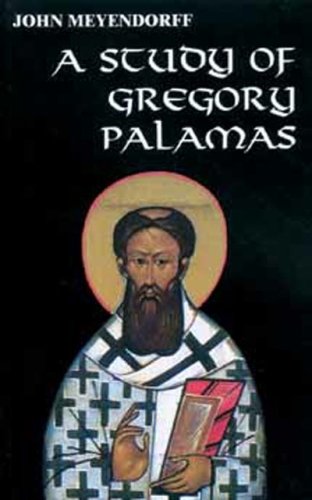
  • Cover of A Study of Gregory Palamas

    A Study of Gregory Palamas

    About John Meyendorff

    St. Vladimir's Seminary Press · 1998

    The first full English study of Palamas's life and work, originally published in French in 1959 and hailed at the time as a major contribution to Western understanding of Eastern Christianity. The starting point for any serious reading of Palamite theology.

    Buy on Amazon →
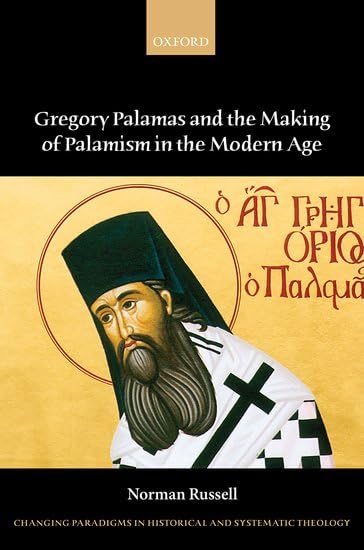
  • Cover of Gregory Palamas and the Making of Palamism in the Modern Age

    Gregory Palamas and the Making of Palamism in the Modern Age

    Changing Paradigms in Historical and Systematic Theology

    About Norman Russell

    Oxford University Press · 2019

    Russell's recent study examines how 'Palamism' was constructed in the twentieth century by Western and Eastern theologians for polemical and apologetic purposes, then returns to Palamas himself to read his tradition, philosophy, and theology on their own terms.

    Buy on Amazon →
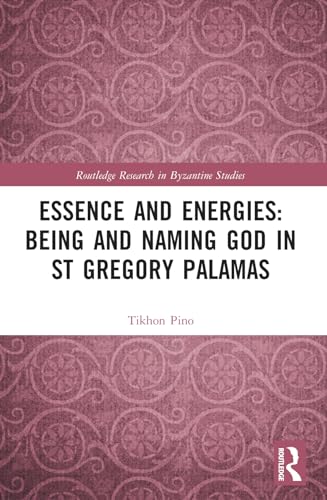
  • Cover of Essence and Energies: Being and Naming God in St. Gregory Palamas

    Essence and Energies: Being and Naming God in St. Gregory Palamas

    Routledge Research in Byzantine Studies

    About Tikhon Alexander Pino

    Routledge · 2023

    Pino's comprehensive account of the essence-energies distinction across Palamas's twenty-five treatises and letters, written over twenty years, the standard scholarly treatment for the modal grammar of the distinction. The book to read alongside the florilegium on this profile.

    Buy on Amazon →

Events during this saint's life

  • 1341–1351St Gregory Palamas and the Hesychast Councils→
Explore the interactive timeline →

At a glance

Born
1296 (Constantinople)
Reposed
November 14, 1359 (Thessaloniki)
See
Thessaloniki
Feast
November 14 · Second Sunday of Great Lent