Purify
TodayBiblePrayersSaints
Discover
CalendarCommunityShop
SupportAccount

The Bible

  • Old Testament
  • New Testament
  • Search

The Saints

  • The Saints
  • The Fathers
  • Writings

The Library

  • Reading
  • Discover
  • Councils
  • Topics
  • Heresies
  • Shop

The Calendar

  • Today
  • This month
  • Pascha
  • The fasts

The Prayer

  • Open today's prayer
  • Morning Rule
  • Evening Rule
  • The Jesus Prayer
  • Learn to Pray

About this work

  • About
  • Purify Plus
  • Privacy
  • Terms
  • FAQ
  • Support the work
  • What's new
  • Account

Find us

Discord@purifymylife@purify.app@purifymylife
Language
Purify

Glory to God for all things.

© 2026 · 1.3 · Public-domain texts unless otherwise noted.

Saints

Go
Icon of St. Gregory of Nyssa

“The Cappadocian”

St. Gregory of Nyssa

Bishop of Nyssa · The Cappadocian Father

The youngest of the great Cappadocians, brother of St. Basil and St. Macrina, a profound mystical theologian whose works on the soul and the vision of God shaped all later Orthodox thought.

1 reader askingSign in to request
Born
c. 335 (Caesarea in Cappadocia)
Reposed
c. 395 (Nyssa)
See
Nyssa
Feast
January 10

His life

Gregory was born around 335 at Caesarea in Cappadocia, into a family that gave more saints to the Church than perhaps any other: his grandmother Macrina the Elder, his parents Basil and Emmelia, his elder brother Basil the Great, his sister Macrina the Younger, and his brother Peter of Sebaste are all numbered among the saints. He was the youngest of the brothers, and in his early life leaned toward the career of a rhetorician rather than the service of the Church.

Drawn back to the things of God by the example of his sister Macrina and the urging of his brother Basil, he was eventually ordained, and around the year 372 Basil consecrated him bishop of the small town of Nyssa, needing a trustworthy ally in the struggle against the Arians. Gregory was no administrator, Basil himself complained of his brother's unworldliness, and the Arian party soon contrived his deposition and exile.

He returned in triumph at the death of the Arian emperor Valens, and after the repose of Basil he came into his own as a theologian of the first rank. At the Second Ecumenical Council in Constantinople in 381 he was a leading defender of the divinity of the Holy Spirit, and the council named him a touchstone of orthodoxy for the churches of Pontus.

His writings, the great catechetical oration, the treatise on the soul and the resurrection composed as a dialogue with the dying Macrina, the Life of Moses, the homilies on the Song of Songs, and his works against Eunomius, explore the endless ascent of the soul toward a God who can never be exhausted. He reposed around 395, and the Church honors him on the tenth of January among the great Fathers and teachers of the Cappadocian age.

In his own words

“Concepts create idols; only wonder grasps anything.
Attributed; the saying preserved in the tradition of the Cappadocian Fathers
“For this is the true vision of God, never to be satisfied in the desire to see Him.
Life of Moses II.239

Writings

Read his works

1 of 1 work
  • c. 385

    The Great Catechism

    Oratio Catechetica Magna, the Trinity, the Incarnation, the Sacraments, in forty chapters

    Gregory's catechist's notebook: how to teach the Trinity, the Incarnation, the Atonement, and the Sacraments to Jews, pagans, Manicheans, and Arians. One of the great systematic theological works of the fourth century, alongside Athanasius on the Incarnation and Basil on the Holy Spirit.

    • Trinity
    • Incarnation
    • Atonement
    • Sacraments

    Open work →

Holy St. Gregory of Nyssa, pray to God for us.

Licensed Works

Books in print

These works are licensed and copyrighted by their publishers and cannot be hosted on Purify. As an Amazon Associate, Purify earns from qualifying purchases.

  • Cover of The Life of Moses

    The Life of Moses

    Classics of Western Spirituality

    By Gregory of Nyssa

    Paulist Press · 1978

    Gregory reads Moses's ascent of Sinai as the soul's endless ascent into the darkness of God, the seminal text of Eastern mystical theology. Malherbe and Ferguson translation, with preface by John Meyendorff.

    Buy on Amazon →
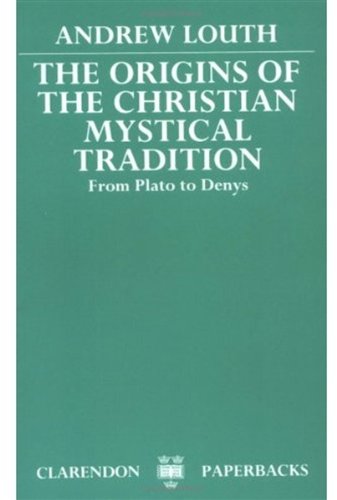
  • Cover of The Origins of the Christian Mystical Tradition

    The Origins of the Christian Mystical Tradition

    From Plato to Denys

    About Andrew Louth

    Oxford University Press · 1981

    Louth's classic study of the patristic mystical tradition from Plato and Philo through Origen, Athanasius, Gregory of Nyssa, Evagrius, Macarius, and Augustine to Denys the Areopagite, Nyssa's central place in the upstream of the essence-energies distinction read in its full Eastern context.

    Buy on Amazon →

Events during this saint's life

  • May–July 381The Second Ecumenical Council at Constantinople→
Explore the interactive timeline →

At a glance

Born
c. 335 (Caesarea in Cappadocia)
Reposed
c. 395 (Nyssa)
See
Nyssa
Feast
January 10